Within the pharmaceutical industry, Process Research and Development (R&D) traditionally focused on stabilizing chemical processes. Some 40 years ago, there was insufficient emphasis on crucial scale-up considerations such as safety, waste management, and energy efficiency. The industry rationalized its practices by arguing that the life-saving benefits of pharmaceutical products significantly outweighed the environmental impact of the waste produced. Consequently, pharma emerged as one of the least efficient sectors in terms of waste generation per unit of product manufactured. Moreover, once a less than ideal process is scaled to commercial production and embedded in subsequent regulatory filings, opting for an alternative becomes a costly and time-consuming endeavor due to regulatory hurdles.
Hence, identifying the most efficient process route during the development phase is crucial. Starting in early 2000's there has been a paradigm shift within the industry towards recognizing and addressing the need for more sustainable and efficient process designs.
AAPharmaSyn has been the pioneer in helping its clients to evaluate and preemptively address process hurdle both in generics and proprietary APIs. We offer comprehensive pharmaceutical process research and development services for drug substance that include
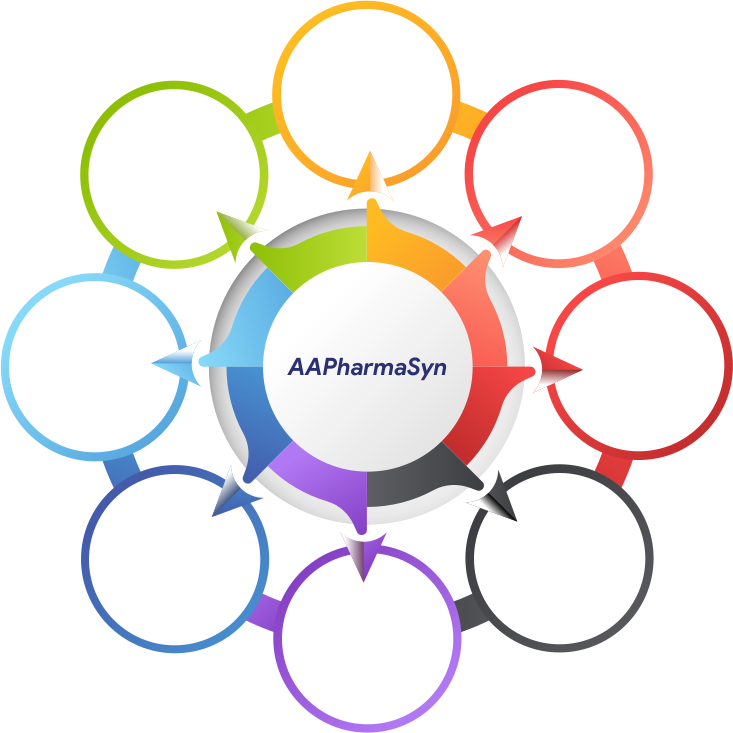
Process Development and optimization
Analytical Method Development and Validation
Lab-scale Process Evaluation
Parametric Studies (DOE)
Analytical Method Transfer
Specifications Development
Reference Standard Qualification
Route Scouting (i.e. process research)
AAPharmaSyn
Process Development and optimization
Analytical Method Development and Validation
Lab-scale Process Evaluation
Parametric Studies (DOE)
Analytical Method Transfer
Specifications Development
Reference Standard Qualification
Route Scouting (i.e. process research)
As we conduct Route scouting activities, we are guided by the best industry practices summarized within 13 principles of process chemistry.
Prevention
- it is better to prevent waste than to treat/clean up after its created
Safer Solvents/Auxiliaries
- use of innocuous solvents (e.g. water); minimization of drying agents, column chromatography, etc.
Design For Degradation
- ideally, process products and by-products should breakdown into innocuous materials and/or do not persist in the environment
Atom Economy
- incorporation of all the atoms used in the process into the final product
Energy Efficiency
- avoidance of extreme cryogenics (-78 ℃), prolonged reaction times
Real Time Analysis
- robust analytical methods designed for ‘real-time’ In-process monitoring/control of a reaction
Minimization Of Hazardous Conditions
- avoidance of reagents that pose safety threat
Use Of Renewable Raw Materials
- e.g. plant-derived RM, microbial reactions, etc.
Legal
- optimal process provides opportunities for new IP and does not infringe on any existing IP